

In This Episode
On my mind is correlation. There are plenty of financial market correlations, both implied and realized. In equities, we talk a good deal about the correlation implied by the relationship between S&P 500 index implied vol and the implied vol on the stocks within the index. That’s been low, to put it mildly. How about the correlation between the dollar and SPX? A signature aspect of the recent risk event was a weaker dollar, even as rates rose and the VIX rose while the SPX swooned.
A correlation that gets little attention is that between an asset and its implied volatility. We know that – with only rare exceptions, when the SPX rises, the VIX falls. The correlation runs deep, about negative 80% or so. But for select other assets – and this is the main point of my little talk here – the correlation between the price and the implied volatility – is often actually positive. We call them SUVU, “stock up, vol up” assets. SUVU is that compelling financial trait of an asset that leads to substantial option trading volume as well as significant “derivative” ETF assets under management.
Over the course of 20 minutes, I walk through how the option market pricing consequences of these assets with unique return distributions. I hope you enjoy the discussion and find it useful.
Transcript
DownloadDean: Hello, this is Dean Curnutt and welcome to the Alpha Exchange where we explore topics in financial markets associated with managing risk, generating return and the deployment of capital in the alternative investment industry.
Well folks, almost seven months are behind us in 2025. We reached peak VIX on April 8th, peak Daylight on June 20th. Peak political insanity. Well that’s coming soon I suspect. To be sure. Washington dysfunction is trending sharply higher, but S&P realized volume has been trending sharply lower, peaking at over 51 those bad days of April. One month realized volume registers a paltry 8.9%. I often suggest that the day to day swings in an asset, if sufficiently large, are a call to action for investors. Interest in option based hedging rises, volume volume are indeed highly correlated. Without a 2% down move on the S&P since April 21, there’s currently little urgency to spend protective premium. The muted level of volatility at the index level is unsurprisingly occurring in tandem with with the same in many of the giant stocks that comprise the S&P 500. In Microsoft, for example, one and two month realized volume are both 13.4%. That is incredibly low. Nvidia it’s realizing just 30 over the past month. Meta just 22 on my mind is correlation. They often say that correlation isn’t causation, and that’s fine by me. I know you know this, but there’s a 90% R squared on the regression between US crude oil imports from Norway and drivers killed in a collision with a railway train.
Look it up yourself. It’s in the cheeky book Spurious Correlations by Tyler Vigan. Search long and hard enough and two random variables will inevitably pop up as very highly correlated. We don’t need to run any Granger causality test to prove it out, but the usefulness of correlation is real. To alter a quote from Gordon Gekko mentoring Bev Fox in the movie Wall street, the most valuable commodity I know of is correlation. There are plenty of financial market correlations, both implied and realized, in equities. We talk a good deal about the correlation implied by the relationship between S&P 500 index implied volatility and the implied volume on the stocks within the index that’s been low, to put it mildly. There’s implied correlation between currency pairs extracted from the relative prices of options. For example, with implied volume on the euro and on the yen both versus the dollar, and then with the same on the euro yen cross, we can compute how the market prices the correlation between the euro and yen Spoiler alert, It’s in the 96th percentile over the last five years as both currencies have repeatedly rallied against the sagging dollar on the same day this year.
To me, this is evidence of the anti branding exercise the US seems intent on carrying out, chipping away at dollar dominance. There are many more market correlations to be considered. What’s the correlation between 2 year and 10 year rates? The Greenspan Conundrum celebrating its 20th anniversary this year was originally about the persistence of high back end yields even as the Fed was aggressively easing. If monetary policy is to work, it’s reasonable to expect that short and long rates must move at least in some way together. I’m not sure they do or will at this point, especially if Trump pulls the ripcord on Powell related we’d assume that 10 year treasury yields and 10 year swap rates are highly correlated, though the large presence of those basis traders can yield strange dislocations at times. How about the correlation between the dollar and S& P? This one is time varying for sure and getting some interest these days post that April tantrum. Let’s roll the tape back for a moment and look at the correlation between these prominent macro variables during the 2022 tightening cycle. I’ve shared this observation before that the dollar and S& P were actually more negatively correlated than the S&P and VIX were for large segments of 2022.
Makes sense given that the Fed was moving faster than the rest of the world could. Fast forward to April 25th and a signature aspect of the recent risk event was a weaker dollar even as rates rose and the VIX rose while the S&P swooned. Want to bet on both the S&P falling and a weaker dollar versus the Euro? Your fine friends on the sell side can cook up a dual binary option structure that provides just that. These trades aren’t easy to put on and certainly a hassle to unwind, but if you can find a good price on these parlay bets, they could be worth a flyer. Plenty of other correlations are out there. How about that? Between different months on the crude futures curve there are spread options that trade that imply a certain correlation between two unique months. Default correlations are also really interesting and a key input into pricing the tranche trades that cost Jamie Dimon A cool 6 billion when the London Whale lost the ability to hold price in 2012. Speaking of large water based mammals, I just read Billion Dollar Whale, the story of one MDB and the scandal that rocked Malaysia.
My goodness, at the center of it all, a 32 year old named Jho Low was spending money that wasn’t his at an inconceivable rate. In addition to splurging on diamonds for the Malaysian prime minister’s wife, he also launched a movie studio, which it turns out backed DiCaprio and Martin Scorsese in creating Wolf of Wall Street. In 2013, at least an entertaining movie emerged from the scandal. I mean, I’m not sure where I’d be without that early scene with Matthew McConaughey Revolutions Revolutions A correlation that gets little attention and trust me, it’s a small mission of mine to change this and make the world a better place in the process is that between an asset and its implied volatility. We know that with only rare exception, when the S&P rises, the VIX falls. The correlation runs deep, about negative 80% or so. The beta has time variation, but the correlation is always negative. What do I mean? If we regress daily changes in the S&P on changes in the VIX, the slope may be higher or lower, but the sign is always negative. The slope tells us the extent to which the VIX will fall when the S&P rises, or vice versa.
An example of a very low slope, a period when changes in the S&P produce relatively small changes in the VIX, was during the 2022 tightening cycle. The muted volume beta, as they call it, of that period notwithstanding, it was still the case that the correlation between the VIX and S&P was negative for the S&P and for the lion’s share of equities. A rallying stock price brings with it a lower level of implied volatility. There’s a couple of ways to understand this. The stock may have risen because the company has become more profitable. Its stronger earnings stream serves as a shock absorber that reduces the possibility of financial difficulty. Rising share prices are frequently associated with narrowing credit spreads. Second, as was included in my recent update of sayings on volume risk, realized volume rules the world. That is, implied volatility falls when a typical equity rises. Because those gains are achieved in the context of low realized volatility, the S&P and most stocks experience controlled up moves. The down moves, while less frequent, are often larger. Thus, of the total amount of realized volatility in the typical equity asset, the down moves constitute a larger portion.
But for other select assets, and this is the main point of my little talk here, the correlation between the price and the implied volatility is often actually positive. I can’t possibly expect you to think this is as interesting as I do, but I’m going to try anyway. So here goes. First, I put forth that the most fascinating and highly traded assets are and will continue to be in the SUVU Stock up volume category. In this context, we will talk about just publicly launched Circle. Let me start by describing a table I posted on Twitter a few weeks ago. By the way, the Alpha Exchange is AlphaEx LLC. On Twitter there’s almost daily insight posted free of charge, including my occasional doodles on the VIX. The table shows a number of stock up volup assets and some of the option pricing characteristics that emerge. These stocks include Tesla, Nvidia, the gld, slv, uso, ibit, Etha, the Ethereum, etf, mstr, Coin and Circle. These are all very different from the S&P where changes in the index and VIX are, as noted, persistently and negatively correlated. In contrast, these assets see their realized and implied vols rise as they do.
As I showed in the table, the quote call skew for these assets is consistently well bid and the market typically pays more in volume for an out of the money call than it does for an out of the money put. One conclusion Stock up volup is that compelling financial trait of an asset that leads to substantial option trading volume as well as significant derivative yield and leverage ETF assets under Management Circle will almost surely see this. The stock is off to a fascinating start. Circle has all of 30 days of trading experience on the public markets, yet its option volume on a notional basis is four times that of Visa and MasterCard combined. Circle’s option volume is more than 20 times that of Citi, a deposit taking institution with us for more than two centuries. Why? It’s because the market prices for for now at least options on Circle as a stock up volume up asset. The market cap of the stock was 44 billion as of July 15. In a single day, 9 billion was added a 19% up shock to the share price on July 16. This is an enormous surge even for a volatile stock and it has meaningful impact on how the market prices options when the volume can rise.
As the stock rises, it opens up the distribution paving the way for speculation. In out of the money calls. The call skew tilts up, which is very different from the S&P volume skew and this brings overriders to the table seeking high option premiums, price discovery results, bid offer spreads narrow and more trading is also the result. It’s a virtuous process of generating liquidity in Circle. The August 400 call has a 17 Delta and is quoted at a volume spread of 134 at 138 with real depth shown on both sides. That is incredible for a company that the folks making markets in these option prices know very little about. With near certainty, the quants populating the option montage with furiously updating prices have not read the Genius act or met with Circle’s management team. They are uninterested in any corporate filings the company might drop. Rather, these prices are all made by inference. There’s enough confidence in other parts of the volume surface. Maybe it’s the 25 delta point or even a further upside strike with a 5 delta to back into a level for the 17 delta point. Assets that gain energy as they rise are unique and bring out both buyers and sellers.
We might argue that a stock can gain negative energy in sell offs as it falls fast, bad news can feed on itself, and there’s a long list of assets that have crashed in price. But an equity price is bound by zero. You can’t lose more than 100%. The flip side is simply not true. An asset can rise by hundreds if not thousands of percent. The potential gains are unlimited. Just ask Roaring Kitty. And with the convexity of an option contract, the gains to the long call option holder can be astronomical. And as De Niro said to Pacino in Heat, there’s a flip side to that coin. The buyer’s gain is the seller’s pain. The counterparty asked to write that upside option contract. Neither needs to account for the behavior of the underlying and the risk of a large upshock. The seller and buyer respond to the same dynamics. The tendency for the stock to experience huge up moves. The result is an upward sloping call skew. The manner in which an options delta interacts with its implied volatility doesn’t get all that much discussion. But think about it for a second. A higher implied volume for an out of the money call and is going to increase the delta by how much will actually surprise you.
One way to think about this is to consider the 25 Delta strike for a three month option. Let’s use the S&P and that shiny stablecoin that was stuffed inside Silicon Valley bank circle at 12.3 volume. A three month 105 call has right around a 25 delta on the S&P. For Circle, the volume surface is much higher and as we’ve been exploring together, the call skew tilts up. Turns out you need to go all the way up to the 155% of spot strike to find the 25 delta call? How about 15 delta? The differential becomes even more pronounced, the 106 strike on the S&P and the 190 call strike on circle. The point is that when you operate at higher implied vols and when the call skew tilts up materially, option Delta is exceedingly sticky. Even as strikes become pretty far out of the money. Delta isn’t a probability, but it certainly resembles one and is a shorthand for how investors understand what they are buying or selling. What results is plenty of speculative activity in these pretty distant from strike options, and that fortifies the ability of the likes of Jane and Citadel to price not just those options, but the ones that live in adjacent strikes as well.
The surface becomes propagated. Screens light up with thick interest on both the bid and offered side. As Frenchy from Goodfellas told Henry Hill and Jimmy Conway, it’s beautiful. The Lufthansa Heist let’s finish this discussion by by reviewing another chart posted on Twitter. In it, I showed the performance of six assets so far in the month of July and the degree to which their realized volatilities were sourced from up versus down moves. The table is striking, at least from my vantage point as a certified Volnerd. The assets include IBIT, the Ethereum, ETF, ETHA, Circle, Roblox, SMCI, and Coinbase. These names are up anywhere from 9 to 34% in the month of July alone. They all realize healthy volatility, with IBIT the lowest at 40. But it is the spread of volume on up days to down days that is important. For ibit, the spread is 12. For coin, it’s 21. For for roblox it’s 9. The realized volume on up days is considerably higher than on down days for all of these names. This is not just something you see in traditional equities, and certainly not in the S&P 500. The second part of the table shows the result of this behavior.
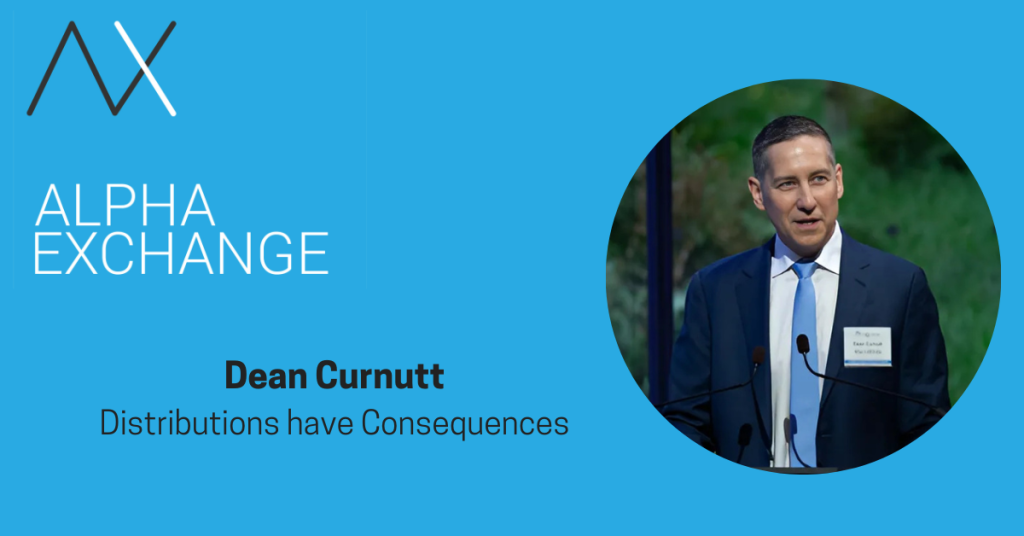
Rahm Emanuel told us that elections have consequences. I say that distributions have consequences as well. When a stock is volatile as it rises, implied volatility will rise as the stock goes higher. For each of these six assets, one month implied volume is 5 to 15 points higher than it was at the start of July, even amidst incredibly positive returns. Further, the call skew the extra amount of volume for out of the money strikes to the upside has typically steepened. For example, whereas one month at the money volume is up 7.5 in coin, the 25 delta call volume has increased by 9.7. Let me close with a Couple of observations Stock Up Volume up assets are unique, interesting, and lend themselves to a considerable amount of volume both in the underlyings and in the options written on them. Many of these assets also have large legal leveraged ETFs and overriding products as well. There’s something about the sky’s the limit nature of how investors think about these assets that attracts trading interest. If the sky is indeed the limit, a call option struck below the sky could be worth a fortune. Because the upside part of the distribution is deemed to be in play.
A virtuous process results in which buyers and sellers of fortune far out of the money calls interact to discover prices with a sense as to where trades in a few strikes will clear the market makers are able to train their models to build out prices in adjacent strikes. The result is an incredibly rich volume surface, tight bid offers and real liquidity posted on both sides across a very wide spectrum of strikes. Both to the upside and downside, there are a number of characteristics of stock up volume assets. First, of course, they experience a positive correlation between changes in price and changes in implied volatility. For example, even as the correlation between the S&P&VIX has hovered around minus 80% for most of 2025, the recent correlation of daily percent changes in coin to changes in its one month implied volume is around positive 50%. A second feature is that these assets have upward sloping strike skews. This is the market pricing what it experiences when a stock can surge on a one day basis to the degree Circle has recently. The upside call seller needs to embed this potential outcome into pricing. Absorbing that kind of up crash while being short a call is dangerous and the risk if to be taken on needs to be compensated for.
The flip side of this is the buyer willing to pay up for a lottery ticket that has proven to hit in the past. Third, these stocks typically have downward sloping volume structures. Stock up volume up is associated with a pretty high level of realized volume. Of the six stocks I discussed, all had realized volume of 40 or higher in the month of July. So far, when realized volume is high, it’s mostly the case that the term structure of volume will be inverted. In some ways it’s the market acknowledging that it is getting to know and understand the risk properties of the asset, and as it does, volume will steadily decline as time passes. This was certainly the case during the original tech bubble when the term structure of NDX volume was consistently inverted through 2002. Lastly, stock up volup assets have heavy option volumes volumes and specifically heavy call volumes. For coin, the 20 day call to put ratio is around 2.5 to 1. For IBIT it’s about the same. For SMCI, it’s 3 to 1. The action is to the upside. Let’s not forget one of the last characteristics of this unique class of assets.
When the volume and share price spiral higher together in sharp fashion, it’s a strong bet that there’s a reinforcing process that a will lift the share price further still and b will ultimately result in a nasty unwind. See GME in 2021 folks, I have typed out more than 3,146 words here and as Angelo Pappas told Johnny Utah in Point Break, it’s time for lunch. I hope you have an excellent Confidence week. Please keep the feedback coming.
You’ve been listening to the Alpha Exchange. If you’ve enjoyed the show, please do tell a friend. And before we leave, I wanted to invite you to drop us some feedback as we aim to utilize these conversations to contribute to the investment community’s understanding of risk. Your input is valuable and provides direction on where we should focus. Please email us at [email protected]. Thanks again and catch you next time.